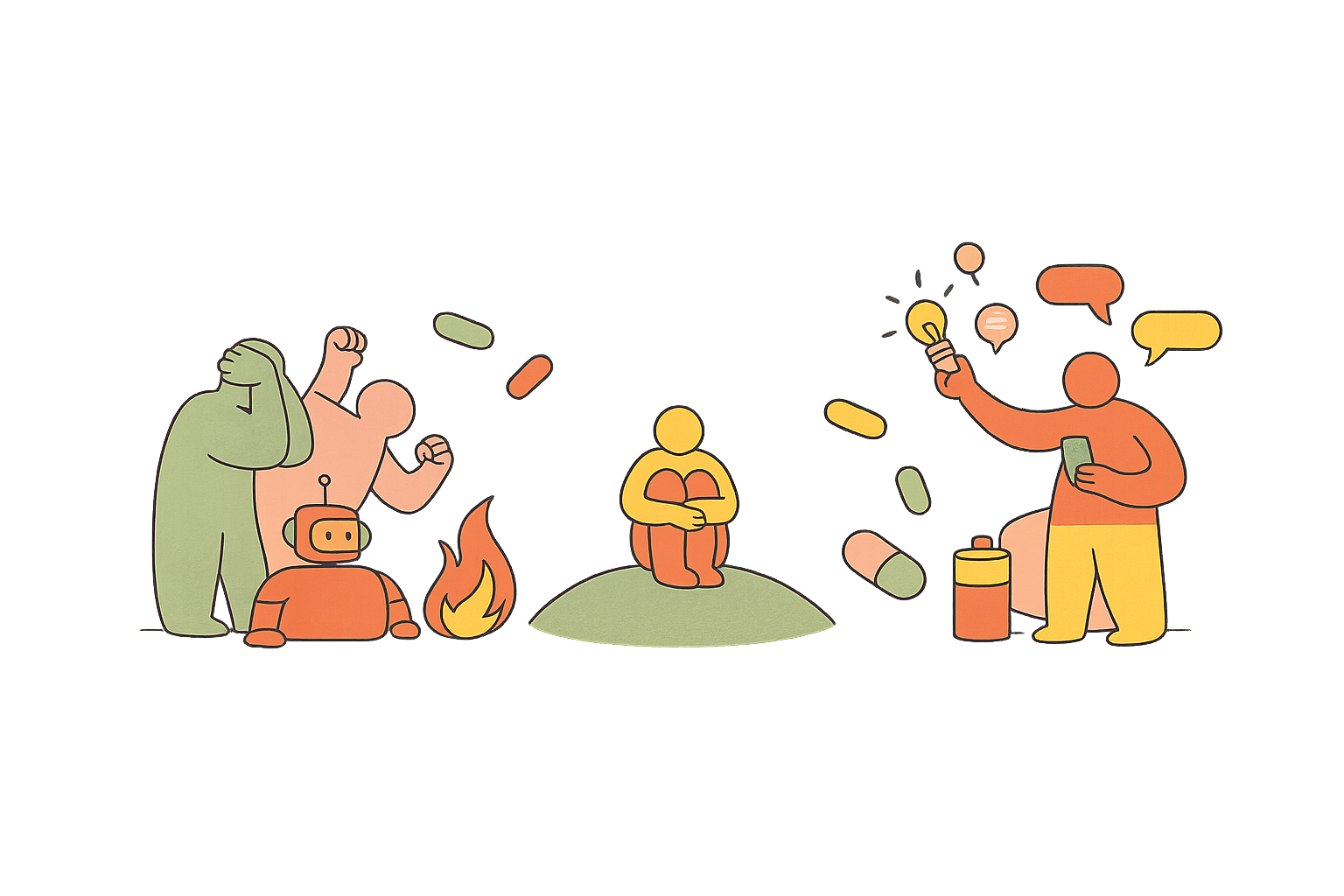
To occupy the middle ground in the age of artificial intelligence is to discover how thinly populated it is. Public argument has a habit of sorting itself into camps. One side treats AI as a civilisational menace whose every manifestation degrades culture, labour and truth. Another receives each new model and tool with the enthusiasm once reserved for household electrification, eager to hold festivals, competitions and product launches before the social costs have even been named. Between these temperaments stands a quieter minority: curious, wary, and often rather lonely.
That loneliness is understandable. The anti-AI position is fuelled by genuine concerns, many of them serious. Lawsuits over copyrighted training data have exposed the unresolved question of whether firms have built lucrative systems on material they had no right to ingest. The environmental criticism is no fantasy either. The International Energy Agency expects electricity demand from data centres to rise sharply by 2030, with AI as a major driver. Such concerns deserve more than a dismissive wave. They are part of the real balance sheet of this technology.
Yet moral certainty can become a substitute for understanding. Some critics speak of AI as though it were a single demonic object rather than a jumble of systems with different capabilities, costs and uses. That attitude makes inquiry feel like complicity. It shuts down the practical questions that matter most: which tasks are genuinely improved, where harms are concentrated, what forms of regulation are workable, and which uses should simply be refused. A politics of permanent outrage offers little help in answering any of them.
The evangelists err in the opposite direction. They have evidence on their side, at least in part. Studies have found that generative AI can improve productivity in certain settings, particularly for less experienced workers, and firms are adopting these tools at remarkable speed. In narrow applications, the gains can be tangible: faster drafting, better summarising, more efficient customer support. That helps explain why the technology has moved so quickly from novelty to infrastructure.
Even so, usefulness is not the same as innocence. A tool may save time while also concentrating power, exploiting creators, increasing energy demand, flooding public life with synthetic slop and weakening habits of thought. The enthusiasts often speak as though deployment itself were proof of value. Markets are poor judges of moral worth. So are online contests for AI “films”, which can mistake frictionless production for artistic achievement.
Most people, meanwhile, remain largely indifferent. They know enough to recognise the jargon and little enough to avoid taking a position. That is normal. Few citizens become experts in every transformative technology. The trouble is that indifference leaves the public conversation to zealots and salesmen.
What, then, is the interested moderate to do? First, resist the temptation to choose a tribe merely for company. Better to be intellectually homeless than comfortably wrong. Second, become specific. Talk less about “AI” in the abstract and more about particular uses: medical imaging, customer service, research assistance, education, surveillance, automated propaganda. Precision lowers the emotional temperature and improves the argument. Third, cultivate a small republic of serious interlocutors, even if it is assembled slowly from academics, engineers, artists, policy people and sceptics who can still bear evidence. A handful of thoughtful correspondents is worth more than a crowd united by posture.
The middle is lonely because it requires two unfashionable virtues at once: discernment and restraint. It asks one to admit that AI can be useful without calling it emancipatory, and dangerous without calling it satanic. That may never be the loudest position. It is, however, the one most likely to remain standing when the slogans have exhausted themselves.
Sources: Associated Press; International Energy Agency, “Energy and AI” (2025); MIT News on generative AI’s environmental impact; NBER on generative AI and worker productivity; Stanford HAI AI Index Report (2025, 2026).