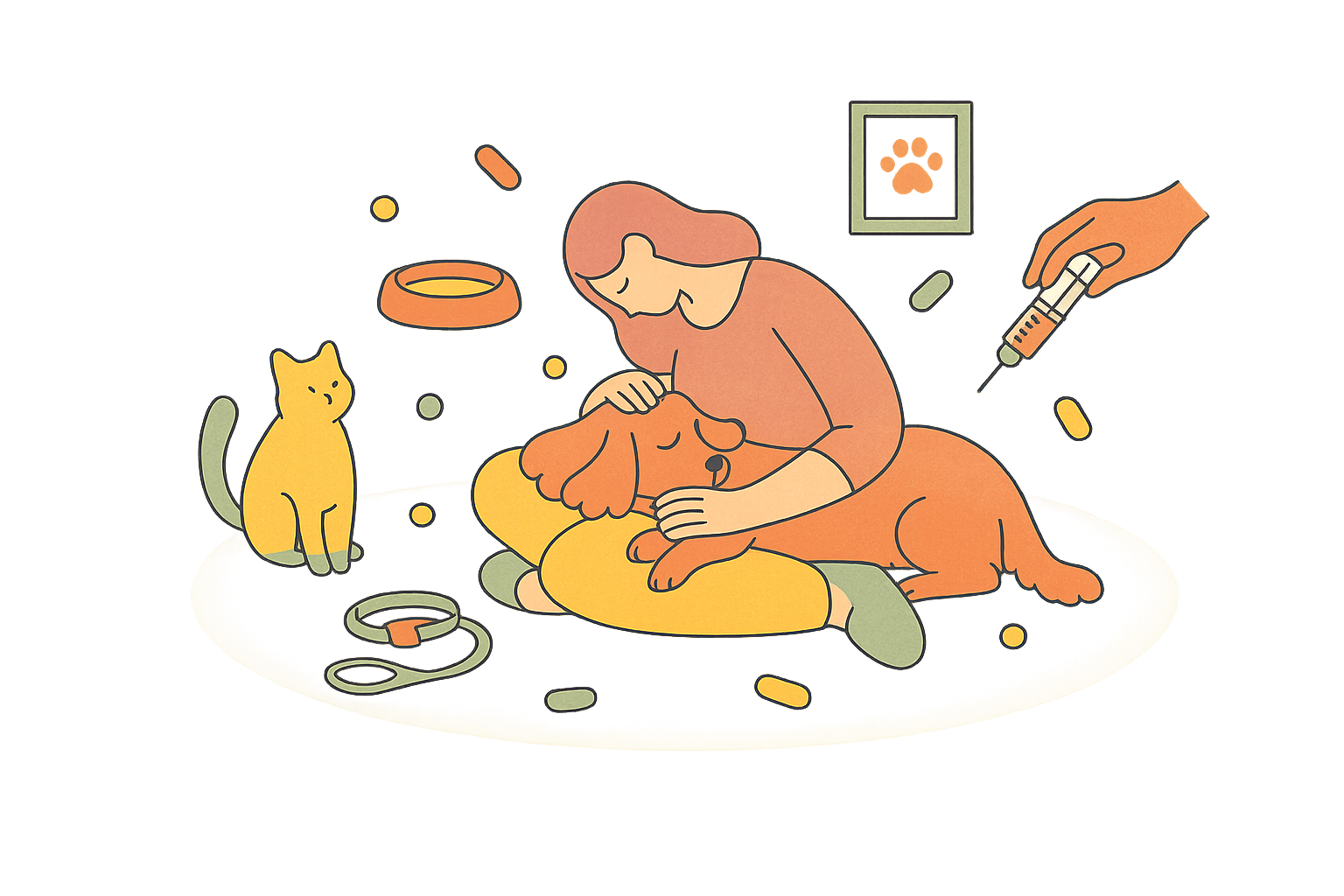
There is a peculiar moral shape to the life of a pet. A dog or cat does not simply happen into a household in the way a child enters the world of human kinship. It is selected, transported, named, domesticated into a private order built almost entirely by others. The human brings the animal into the small universe it will know: the rooms, the routines, the voice that summons dinner, the hand that fastens the lead, the lap or doorstep where the day ends. And then, in many cases, the same human must decide when that world closes.
That feature makes the human–pet bond unlike most other intimate relations. Modern pet-keeping encourages an unusual mixture of guardianship, affection and sovereignty. Owners are urged to regard pets as family, and many plainly do. Veterinary medicine now speaks openly of the “human–animal bond”, of grief, hospice, quality of life, and the hope for a “good death”. Yet the sentiment of kinship sits alongside a legal and practical power that families do not ordinarily possess over one another. One may authorize euthanasia for a suffering spaniel; one may not do so for an ailing parent. The tenderness is real, though so is the asymmetry.
That asymmetry helps explain why pet bereavement often carries a particular form of guilt. Research in veterinary ethics describes euthanasia as one of the most emotionally difficult decisions owners face, even when it is clearly intended to relieve suffering. The trouble is not only sorrow. It is authorship. The owner has not merely witnessed decline or loss; he has participated in the timing and manner of death. Even when the decision is merciful, it can feel like a breach of the trust on which the animal’s entire life depended. The creature is delivered to the clinic, soothed by the familiar voice, and then ushered out of life by the very person who has, until that point, made life safe.
This does not make the act cruel. On the contrary, one reason euthanasia exists in companion-animal medicine is to spare animals a prolonged and frightening end that they cannot understand and cannot consent to. Veterinary literature is full of warnings against both premature killing and delayed killing: “convenience euthanasia” on one side, futile overtreatment on the other. The ethical burden lies in judging when continued life has become more ordeal than good. Owners are therefore cast in a role at once loving and judicial. They must interpret suffering for a creature that cannot speak in propositions, only in appetite, fatigue, pain, fear and withdrawal.
Human familial life arranges the same elements differently. We do sometimes accompany to death the people who brought us into the world; we sit by parents rather than send them off. We also leave behind children whom we brought into life, hoping chronology will preserve that order. The ordinary human pattern is marked by reciprocity across time: dependence reverses, care circulates, authority wanes. In the life of a pet, dependence remains largely one-directional from beginning to end.
Perhaps that is why the death of a pet can feel so morally concentrated. It gathers into a single relationship nearly every role at once: benefactor, keeper, interpreter, protector, executioner of mercy. To love an animal well is to accept that one’s stewardship may culminate in an irreversible decision made on its behalf. That is less a contradiction than a severe expression of care. The sadness comes from knowing that the hand which welcomed the creature into its known world may also have to be the hand that gently lets it leave.
Citations: American Veterinary Medical Association Guidelines for the Euthanasia of Animals; “Ethical and Practical Considerations Associated with Companion Animal Euthanasia”, Animals, 2023; “Veterinarians and Humane Endings: When Is It the Right Time to Euthanize a Companion Animal?”, Frontiers in Veterinary Science, 2017; “Ethical Challenges Posed by Advanced Veterinary Care in Companion Animal Veterinary Practice”, Animals, 2021; “Philosophy of a ‘Good Death’ in Small Animals and Consequences for Euthanasia in Animal Law and Veterinary Practice”, Animals, 2020.