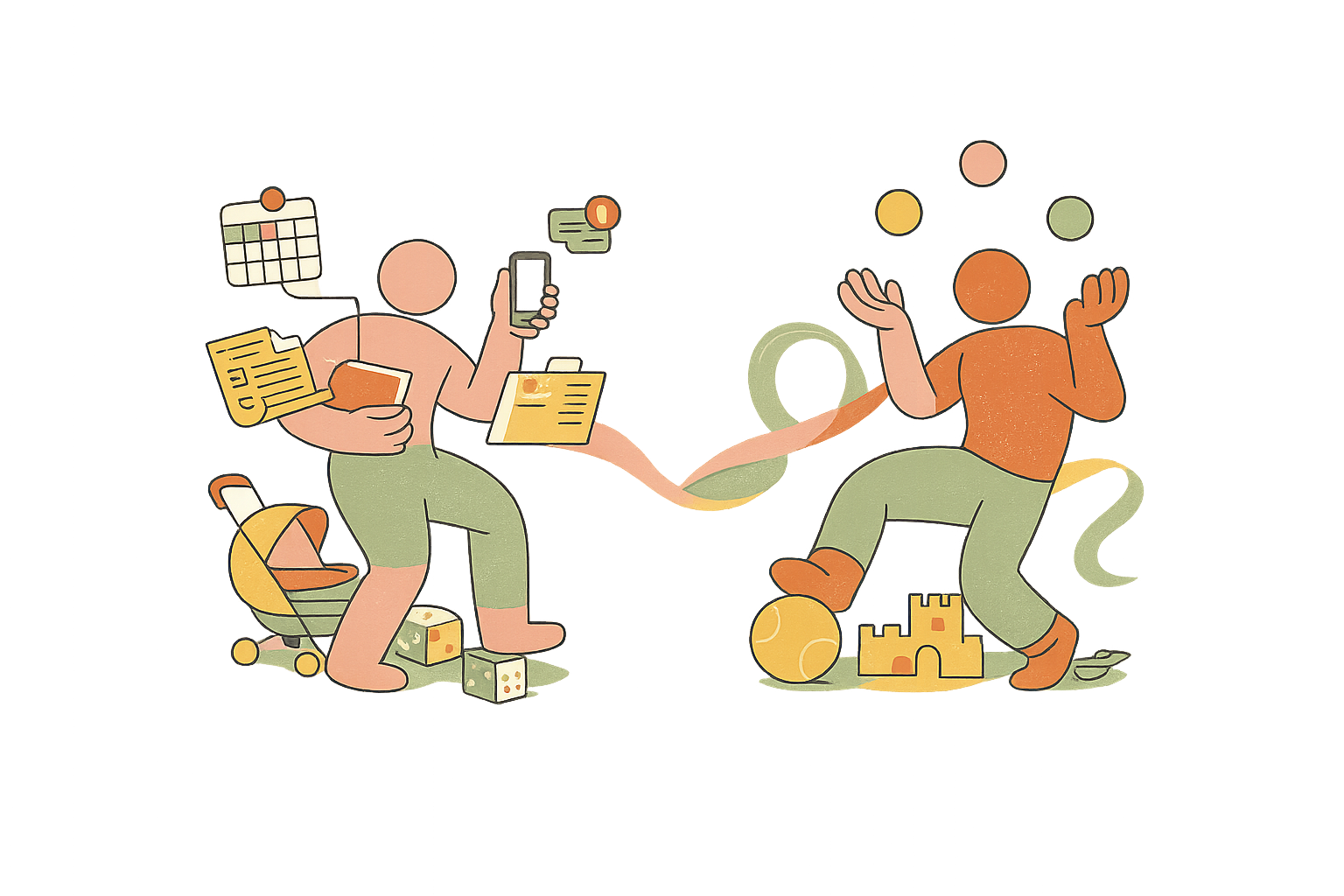
Modern life tends to imagine the human being in two registers. There is the person of schedules, errands, messages, childcare, invoices and commutes: homo quotidianus, the everyday human. Then there is the player, improviser, maker of games, rituals and forms: homo ludens, Huizinga’s “man the player”. Much of contemporary unease may lie in the way these two figures have been arranged against each other, as if ordinary life were the serious business and play a decorative surplus.
That division is historically thin. Huizinga’s argument in *Homo Ludens* was that play is not a trivial interruption of culture; it stands near the origin of culture itself. Law, war, poetry, ritual and sport all bear the marks of rule-bound performance, symbolic contest and shared make-believe. Civilisation does not emerge only from labour and necessity. It also grows from forms of action undertaken within conventions, repeated for meaning, and sustained because participants recognise a world inside the frame.
The everyday, meanwhile, has its own intellectual history. Henri Lefebvre treated everyday life as the decisive terrain of modern society: the place where systems of work, consumption and power settle into habit. The ordinary day is never merely private. It is organised by institutions, technologies and economic imperatives, then internalised as routine. That insight remains useful. A calendar full of tasks can look natural when it is in fact heavily designed. Deadlines, notifications, performance metrics and permanent accessibility give daily life a managerial shape. One need not romanticise the past to notice that many people now inhabit time as a sequence of obligations rather than durations with texture.
This matters because play is not only leisure in the narrow sense. It is one of the ways human beings test freedom within form. Children learn rules by bending them. Adults do something similar in art, conversation, flirtation, sport, theatre, worship and humour. Even storytelling, one of humanity’s oldest social technologies, depends on shared conventions and imaginative entry into an “as if” world. Play offers rehearsal without finality. It permits experimentation at lower stakes. It also produces attachment: to places, to customs, to one another.
The trouble begins when the ordinary day is stripped of this ludic element. A life can become efficient yet curiously airless. Recent work on well-being and work-life balance regularly finds that time use, leisure and subjective satisfaction are closely connected, and that many workers experience chronic pressure over how their hours are arranged. The issue is not simply the quantity of free time, though that matters. It is whether parts of life remain uncolonised by instrumental logic. A walk taken only to optimise health data is no longer quite a walk. A meal staged for content ceases to be fully convivial. Even rest is now expected to justify itself.
A healthier ideal would allow homo quotidianus and homo ludens to meet. Daily life needs structure, repetition and duty; no civilisation can run on improvisation alone. Yet routines become more humane when they contain intervals of spontaneity, festivity, attention and useless skill. To play is to resist being reduced to function. It restores proportion. It reminds us that human beings are not only creatures who maintain life, but creatures who compose it.
The challenge, then, is not to escape everyday life. It is to recover play within it: in public spaces that invite lingering, in schools that reward curiosity, in work cultures that leave room for autonomy, and in private habits that are not measured solely by output. A society that forgets homo ludens may remain productive for a time. It will struggle to remain civilised.
Sources: Encyclopaedia Britannica on *Homo Ludens*, culture, oral tradition, theatre, Henri Lefebvre’s critique of everyday life, and the Situationist International; OECD reports on work-life balance, employee well-being, and subjective well-being.