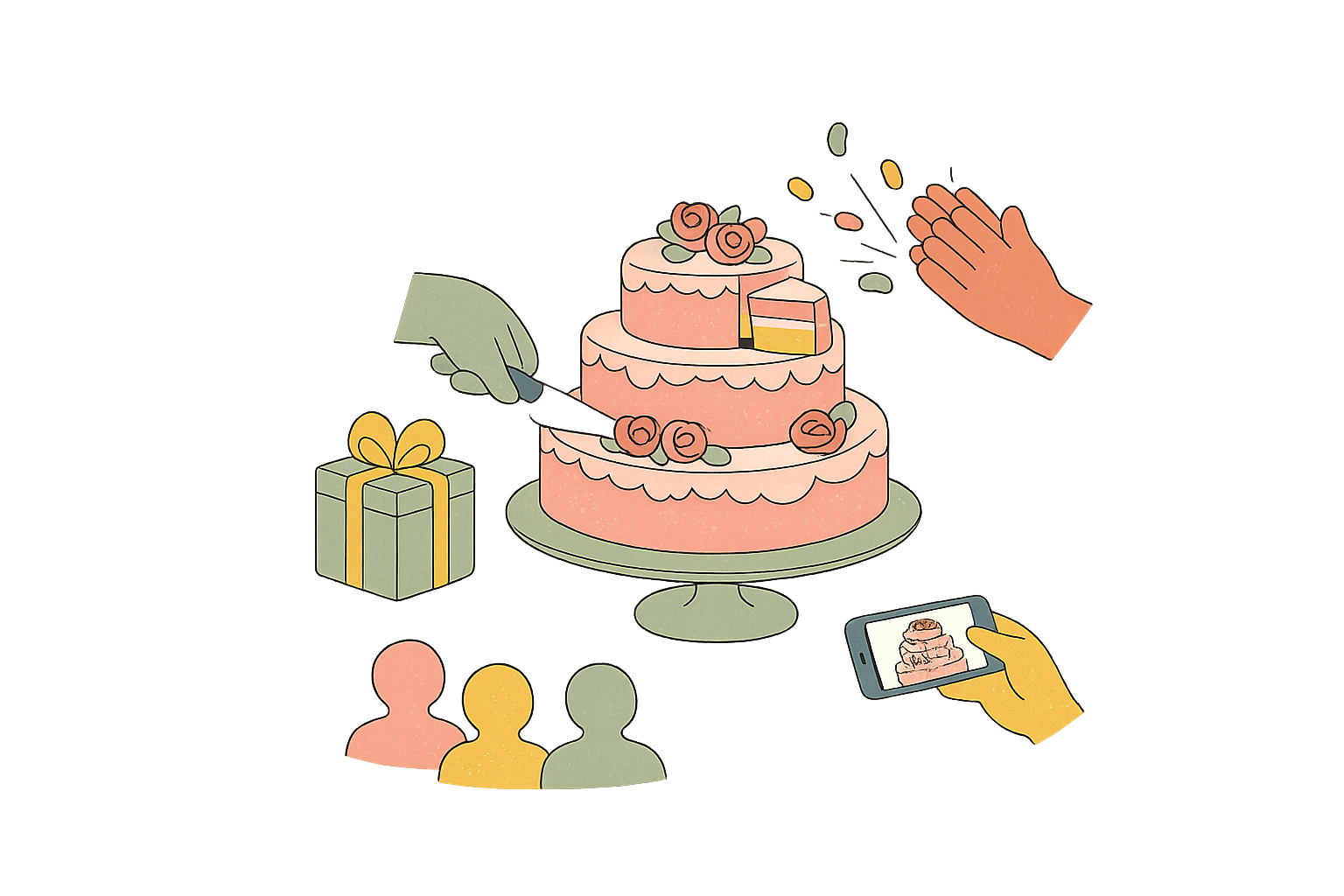
There is a useful way to think about cake prices that has little to do with flour, butter or eggs. The price of cake is often the fee a society pays for ritual.
On a purely culinary basis, cakes can look oddly expensive. A tart, a tray of pastries or even a carefully made loaf may require comparable ingredients and respectable skill. Yet cake occupies a different economic category, because it performs a social function that other baked goods rarely do. It is not merely dessert. It is an object that announces occasion. Birthdays, weddings, anniversaries, office farewells and graduations all seem to demand the same edible emblem: something round or tiered, decorated, brought forth ceremonially, then cut in public and shared.
That symbolic role changes the price. Economists would call this a premium on perceived value; anthropologists would recognise a ritual object. The customer buying a celebration cake is not simply purchasing sweetness. The purchase includes convenience, recognisability and emotional clarity. A cake tells a room what is happening without anyone having to explain it. One could mark a promotion with an exquisite mille-feuille, or a family gathering with a splendid tower of sandwiches. Yet those alternatives ask guests to interpret the moment. Cake does not. Its symbolism is pre-installed.
The history of celebratory cakes helps explain this. Cakes have long been linked with birthdays and weddings in Europe and beyond, while many cultures have developed their own ritual foods for festivals, family milestones and religious occasions. The point is less the recipe than the social script. Ritual foods endure because they provide a stable and easily understood way to express belonging, joy and transition. In modern commercial life, cake has become the default script for congratulation itself.
That is why the market tolerates forms of extravagance that would look absurd elsewhere. Multi-tiered wedding cakes, sculpted fondant creations, edible gold, sugar flowers and towering structures partly designed for display can command striking prices. Some of that reflects real cost. Custom cakes are labour-intensive, with consultation, design work, assembly, transport and substantial risk of failure all priced in. Wedding cakes especially are often sold by the slice precisely because they are closer to bespoke event production than to ordinary baking. Industry pricing guides regularly point to many hours of labour and a complexity premium for custom work.
Still, the higher price also reflects something less tangible and more revealing. Buyers are paying for social insurance. They are purchasing an object that will satisfy convention, photograph well, offend nobody and permit the ritual to proceed smoothly. The cake stands in for thoughtfulness. It saves a host from having to invent a new language of celebration every time affection or approval must be shown.
This helps explain why some cakes seem faintly ridiculous: magnificent to look at, mediocre to eat, and burdened with decorations that belong more to theatre than to food. Yet even these creations make sense within the logic of ritual. Ceremonies have always attracted expenditure that exceeds practical value. Flowers wilt, confetti is swept away, and formal clothes are worn once. Cake belongs to the same class of spending. Its excess is part of its meaning.
So cake may indeed be a kind of tax: not a levy imposed by bakers, but a charge accepted by the rest of us for living in a culture that likes recognisable symbols. Ritual requires props. Celebration requires shorthand. And cake, overpriced though it often is, remains the most agreeable token we have devised for turning private feeling into a public event.
Sources: Encyclopaedia entries on birthday cake, birthday customs and king cake; Food and Culture archive material on food as ritual; bakery industry pricing guides from BakeProfit, Clearmargin, BusinessDojo and related specialty-baking analyses.