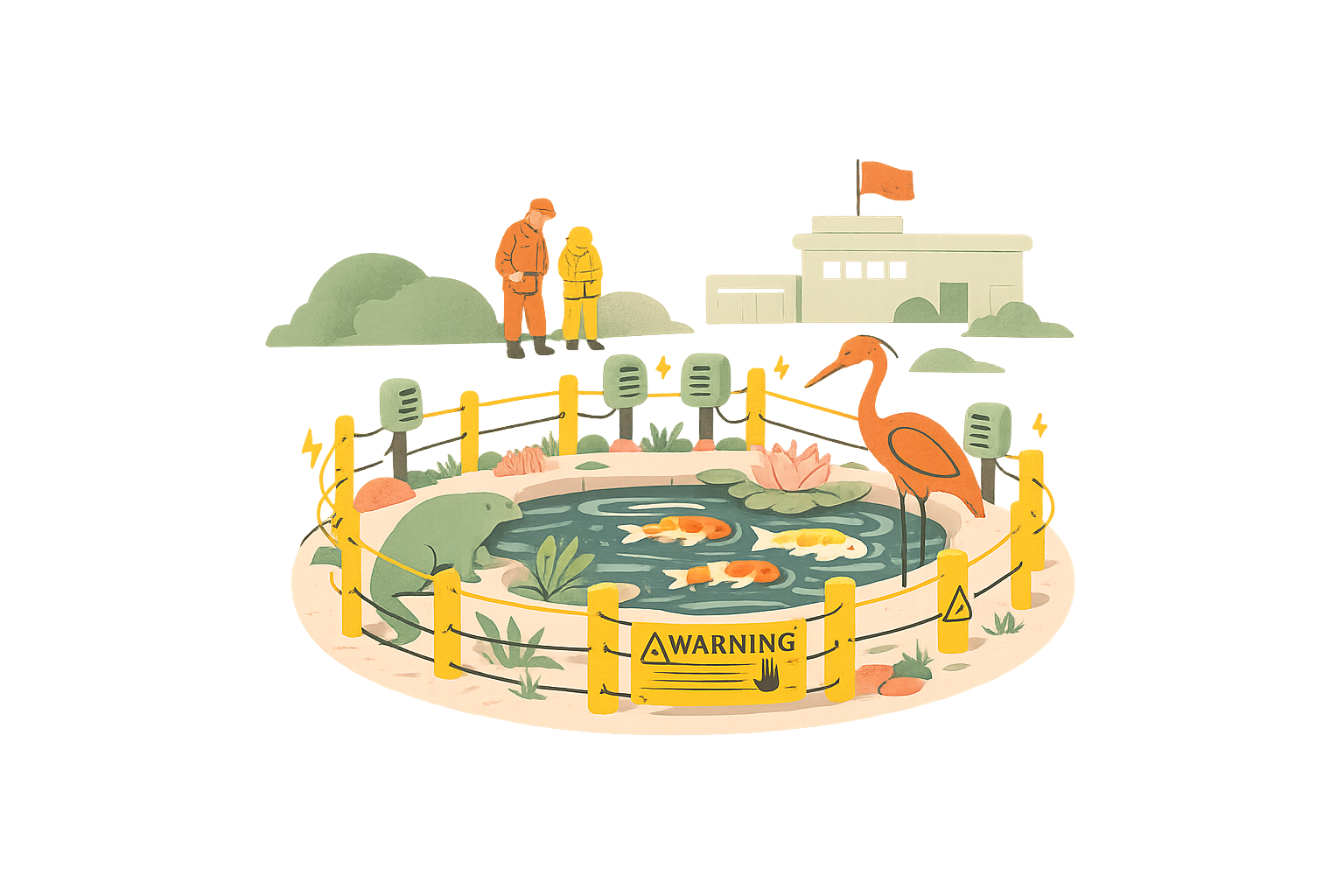
When I was a logistics officer at a submarine command, there was a pond beside the headquarters building. It had once been little more than a natural basin where runoff from the hill behind the compound collected. Over time, however, it had been landscaped into something far more deliberate: a small ornamental garden with paths, plantings and a stock of koi. For a military base, it was an unexpectedly gracious place. The commander was especially fond of it. He had personally pushed for the improvements, and on pleasant days he would walk there after lunch to talk with his staff.
Then the koi began to disappear.
At first the losses were explained in the way such things often are, through rumours and half-glimpsed sightings. Someone said they had seen an otter. Someone else reported a heron. Before long, there was harder evidence. Half-eaten fish began turning up on nearby roads. Ornamental ponds are, after all, invitations to predators. Koi are brightly coloured, slow by the standards of wild fish, and bred for display rather than survival. Herons are patient hunters; otters are opportunists of remarkable intelligence and persistence. A pond that looks serene to human eyes can look, to wildlife, like a well-stocked buffet.
At some point the commander must have expressed his displeasure, because guarding the pond soon became one of the unit’s more curious unofficial missions. Duty personnel were told to make rounds and scare off herons. I doubt many did so with much enthusiasm. Even if they had, it was a losing contest. Wild animals learn quickly. They retreat when disturbed, wait for the humans to leave, and return a short while later. Fish bones continued to appear. The number of koi continued to fall.
The senior enlisted adviser then proposed a new solution: a wildlife deterrent device. This was presented as a machine that would repel animals through flashing lights and ultrasonic sound. Such products are common enough in civilian life, though the evidence for their effectiveness is mixed, especially outdoors, where rain, distance, habituation and the sheer unpredictability of animal behaviour tend to reduce their value. Still, because the pond was a matter of command interest, the plan moved quickly. Five of the devices were installed around the water. They looked like squat sirens dropped into a garden and emitted intermittent beeps that made the place less restful than before. Even so, in retrospect, this was the reasonable phase.
The true masterpiece of institutional overcorrection appeared later. At the time I was a first lieutenant a month away from discharge. I went on two weeks’ leave and returned to find that the perimeter of the pond had been encircled with a yellow electric fence, complete with warning signs announcing high voltage and forbidding contact. The garden had acquired the visual language of a restricted livestock enclosure. One could stand there and wonder what exactly was being defended: the fish, the commander’s preference, or the chain of incentives that turns a passing remark from a superior into a standing project for everyone beneath him.
Large organisations often behave this way. A small issue rises in importance once it attracts the attention of a senior figure. Each layer below interprets that attention in the most risk-averse way possible. No one wants to be accused of indifference, so the response escalates. The result can be absurd, though rarely irrational from the perspective of the participants. In the military, where initiative is often filtered through hierarchy, this dynamic becomes especially visible. An ornamental pond can end up defended with the seriousness of a perimeter asset.
Looking back, I still think it would have been simpler to remove the koi and leave the pond to the birds. A garden does not become more dignified because it has been fortified. Yet that is the sort of scene one encounters in uniform and almost nowhere else: a place built for repose gradually remade by bureaucracy into an object of protection, then disfigured by the effort. A few days after seeing the fence, I left the service. I never learned whether it worked, whether it is still there, or whether anyone eventually decided that the fish were not worth the campaign. What I remember is the logic of the transformation. Outside the military, one rarely sees such a perfect example of how institutions can mistake persistence for purpose.
Sources: General information on koi husbandry and vulnerability in ornamental ponds from wildlife and pond management guidance published by government and university extension agencies; background on heron and otter predation behaviour from wildlife conservation organisations; broad evidence on mixed effectiveness of ultrasonic animal deterrents from consumer protection and wildlife-control literature.