### An Ode to the Landfill
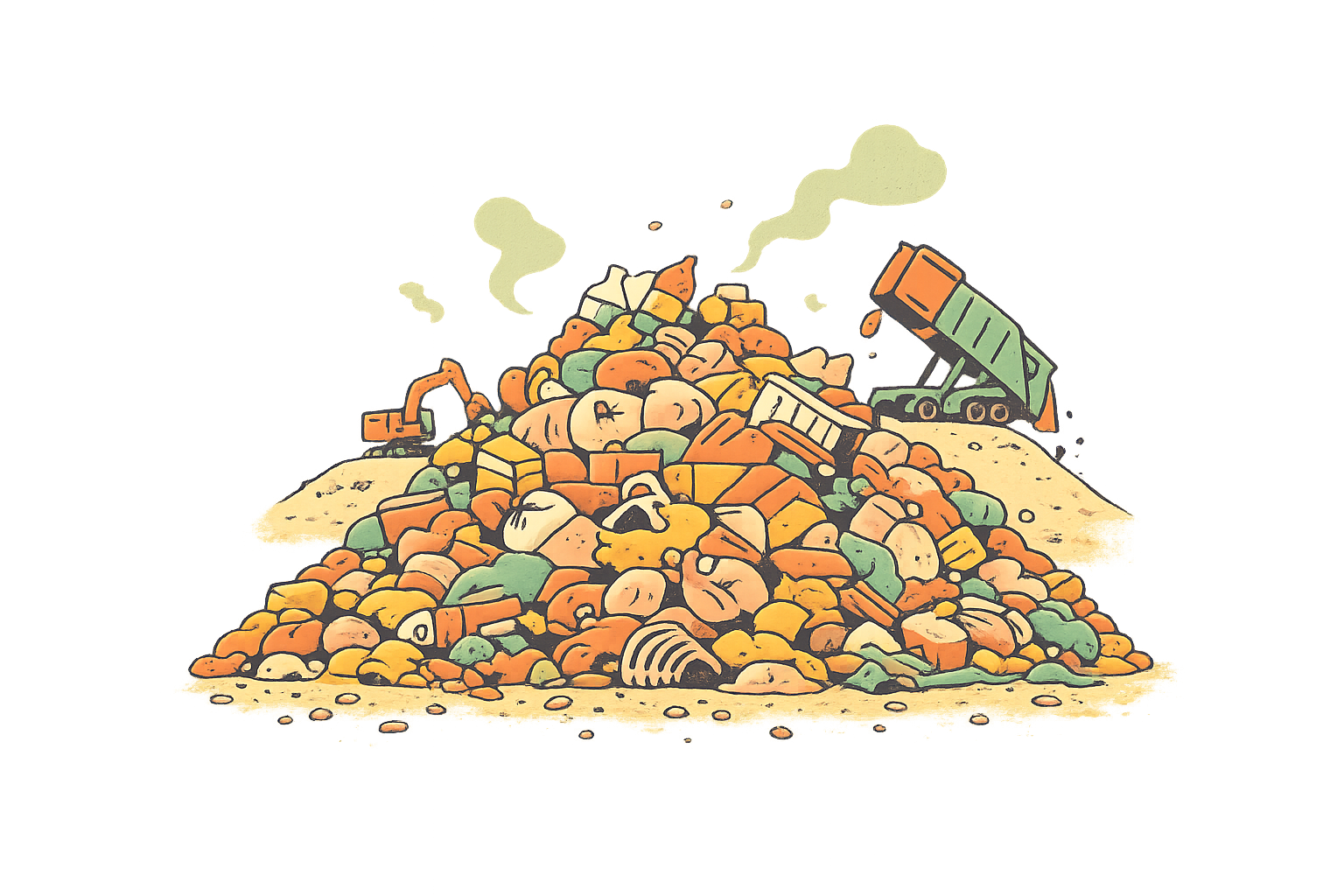
If future archaeologists seek the defining monument of modern civilisation, they may look past our glittering skylines and find, instead, a mound at the edge of town. The landfill is the truest landmark of our age: a man-made escarpment of packaging, surplus, rot and regret. Cathedrals once announced a society’s highest ambitions. Landfills announce its habits.
They are magnificent in the bleakest possible way. Every bag tipped, every pallet discarded, every plastic clamshell entombed beneath compacted layers of yesterday’s convenience speaks to a system that has confused abundance with success. Waste, in the richest societies, is not a side effect. It is often the proof of purchase. The throwaway object is the final sacrament of consumer prosperity: designed for a brief life, marketed as freedom, disposed of as someone else’s problem.
The scale is no longer easy to sentimentalise or ignore. The world now generates well above 2bn tonnes of municipal waste each year, and that total is projected to rise sharply by mid-century. High-income countries remain the great virtuosos of per-capita discard, even as poorer countries bear the harsher consequences of weak collection systems, open dumping and toxic burning. The geography of rubbish reveals the moral geometry of the global economy: consumption concentrated in one place, damage dispersed to another.
Landfills stand at the centre of this arrangement. They are sold as practical necessities, engineered solutions to an unavoidable burden. In truth they are monuments to decisions made much earlier: to produce more than can be repaired, to wrap food in layers of fossil-fuelled convenience, to treat obsolescence as innovation, and to price goods as though their afterlife did not exist. By the time an object reaches the landfill, the culture that created it has already declared disposal normal.
There is, too, a strange perversity in the landfill’s chemistry. Buried waste does not simply vanish into passive obscurity. Organic matter decomposes without oxygen and exhales methane, a greenhouse gas far more potent than carbon dioxide over the shorter term. Waste management has become a major contributor to human-caused methane emissions worldwide. Food, that most basic emblem of life and nourishment, turns especially noxious when abandoned in mass. In some countries, food waste accounts for a striking share of landfill methane. What could have fed people, or at least soils, instead warms the atmosphere.
And yet the landfill remains curiously invisible in public imagination. We speak endlessly of innovation, disruption and digital futures, while the physical residue of those dreams accumulates in silent hills. The landfill is where the mythology of frictionless consumption goes to become topography. It is the underside of same-day delivery, seasonal fashion, gadget upgrades and the disposable feast. A civilisation can be judged by what it builds; it can be judged more harshly by what it buries.
The defenders of the status quo offer familiar consolations: better liners, gas capture, waste-to-energy plants, smarter collection. These matter, and in many places they are urgently needed. But they remain downstream answers to an upstream addiction. A society cannot engineer its way out of a culture of excess if it continues to produce waste as though the Earth were an infinite backroom. The more serious response lies in reducing material throughput, designing products to last, repairing what can be repaired, composting what can return to soil, and treating reuse as a civic virtue rather than a nostalgic hobby.
The landfill deserves its ode because it is honest. It tells the truth our advertising does not. It records, without flattery, the distance between what we claim to value and what we routinely do. We say we cherish nature, prudence and posterity; then we heap up mountains of plastic film, spoiled food and broken things. The landfill is the grand monument of a civilisation that mastered extraction and forgot restraint.
If there is any hope in contemplating it, it lies in embarrassment. Great societies should be ashamed of their ugliest monuments. Shame, properly directed, can become policy. It can become bans on needless packaging, systems for repair and refill, serious composting, circular design, and a politics willing to see waste as a failure of production rather than a test of disposal. Until then, the landfill will continue to rise: our most honest skyline, our most democratic inheritance, our age’s colossal and stinking memorial.
**Sources:** World Bank, *What a Waste 3.0* and related waste-management updates; UNEP, *Global Waste Management Outlook 2024* and Zero Waste campaign materials; OECD environmental indicators on waste and circular economy; US EPA materials on landfill methane, food waste and municipal solid-waste emissions.