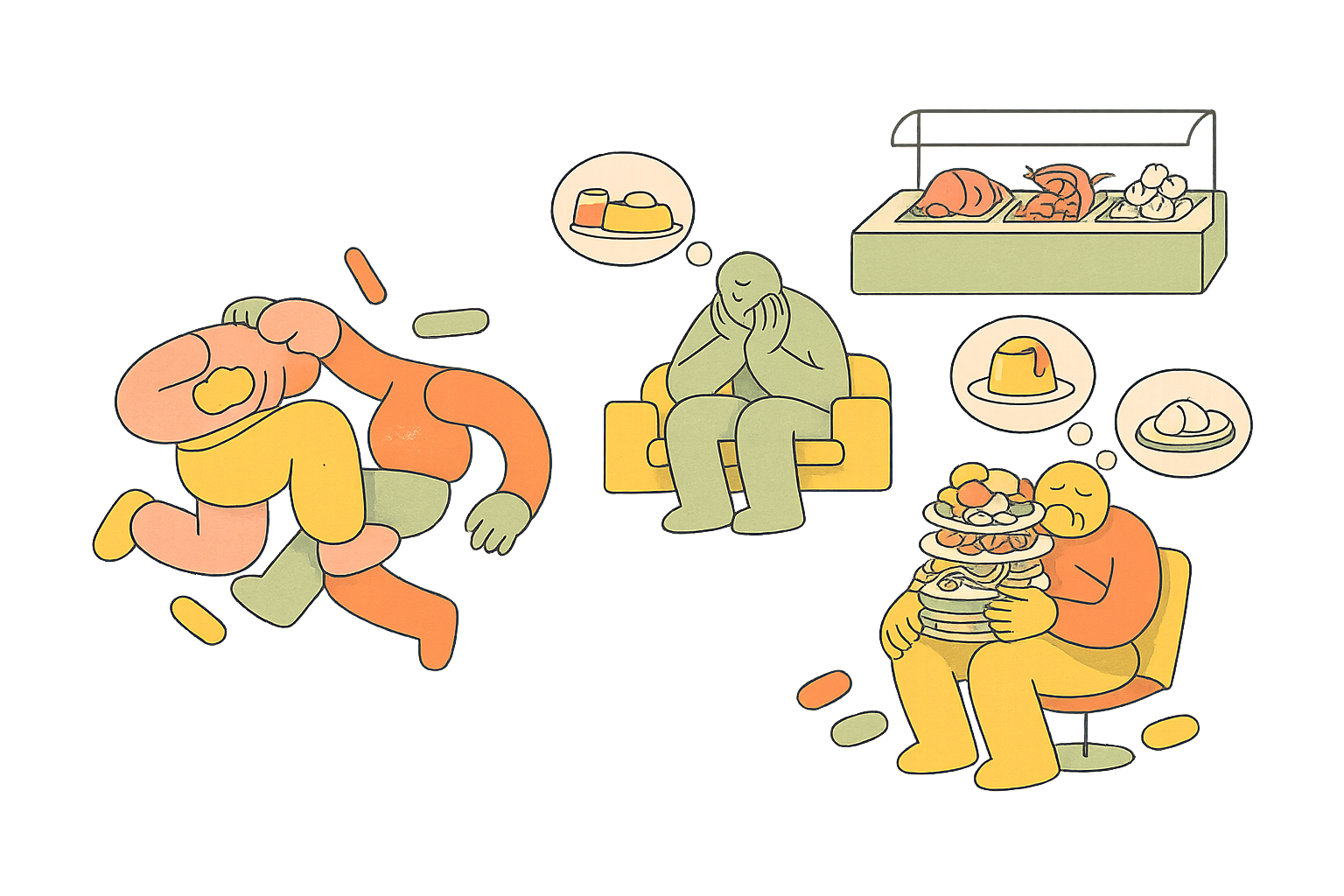
There is something almost theological about the all-you-can-eat buffet. It promises abundance, flatters appetite and then leaves the diner to reckon with a familiar trinity of remorse. The first regret arrives before the meal: one has failed to fast properly, failed to prepare one’s body as if for a competitive event. The second comes at the table itself, amid the tottering plates and impaired judgement: one has eaten too much, too quickly, and with less pleasure than the quantity ought to justify. The third appears later, often absurdly soon after returning home: hunger stirs again, and the mind turns accusingly to the missed pudding, the forgone dumpling, the final plate that would, in retrospect, have been “worth it”.
This cycle feels comic because it is irrational, yet the irrationality is built into the institution. A buffet is less a meal than a psychological experiment with sneeze guards. Variety encourages consumption. Researchers have long observed that when people are offered many different foods, they tend to eat more than they would from a single dish. The reason lies partly in what nutrition scientists call sensory-specific satiety: the more one eats of a given flavour, the less rewarding that particular item becomes, while other tastes remain enticing. A roast loses its glamour halfway through. The sight of noodles, prawns or cake restores it. The buffet exploits this beautifully. It keeps desire alive by constantly refreshing it.
Hence the first regret. Starving oneself in anticipation feels strategic, a way to “get one’s money’s worth”. Yet extreme hunger rarely produces wise or elegant consumption. It inclines diners toward speed, impulsiveness and bad sequencing. One lunges at the starches, fills up on the obvious, and mistakes urgency for optimisation. Behavioural research on eating suggests that restrained intentions often buckle under conditions of abundance. The buffet invites a fantasy of perfect self-management while arranging precisely the circumstances in which self-management fails.
Then comes the central regret: gluttony without satisfaction. Quantity and pleasure are related only up to a point. Beyond that point, eating becomes logistical. The diner ceases to savour and begins to administer. There is a queue to beat, a carving station to revisit, an internal ledger to balance against the entry price. The meal becomes a bargain hunt conducted with the stomach. This is why buffets so often produce fullness stripped of triumph. One has consumed a great deal and somehow experienced too little.
Restaurants understand this better than customers do. The economics of the buffet depend on averages, not on the mythical champion eater. Most people overestimate how much they can consume, then load up on cheap, filling foods and tire before they reach the expensive items they had imagined justifying the bill. The business works because the fantasy of limitless possibility is worth paying for, even when the body cashes out earlier than the mind expected.
The final regret, the one that arrives later at home, is the most revealing. How can hunger return after excess? Partly because appetite is not a simple meter that, once filled, stays obediently at “off”. Palatability, timing, habit and expectation all shape how hunger is felt. Large, stimulating meals do not always grant the lasting satiety one imagines, especially if eaten quickly. Nor is the later craving purely physiological. It is also narrative. The diner remembers opportunity lost. Dessert becomes symbol rather than food. The missed plate is mourned because the buffet presented abundance as a moral test, and no outcome felt entirely victorious.
That is the true irony of the all-you-can-eat buffet. It stages greed as freedom and leaves even the successful participant with the sense of having misplayed the game. Eat lightly, and you have wasted the ticket. Eat heavily, and you have wasted the evening. Stop when prudent, and you wonder what pleasures were neglected. Continue past reason, and prudence returns as indigestion.
The buffet, in other words, is a small parable of modern abundance. When options multiply, satisfaction often recedes. Plenty does not calm desire; it agitates it, fragments it, and teaches us to confuse having access with making use. No wonder the meal ends in regret. The buffet offers the oldest temptation in the newest commercial form: more than one needs, less than one can master.
Citations: PubMed; NIH; PMC; ScienceDirect; Forbes.