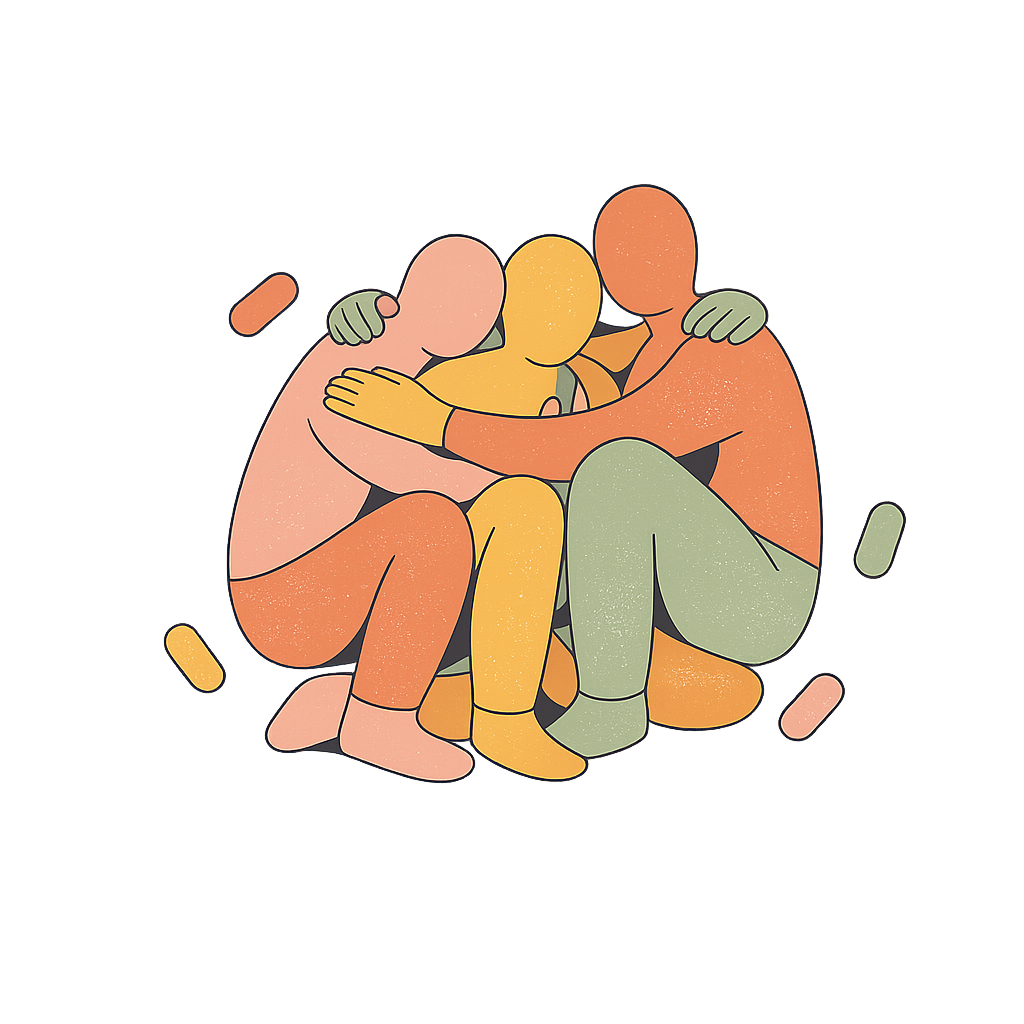
Forgiveness is often praised as a virtue, though in practice it is less a grand moral gesture than a form of judgment. It asks two questions at once: what does this person deserve, and what do I need in order to live sensibly with what has happened? The instinct to forgive once for trust, twice for love, and a third time for one’s own peace has a certain practical wisdom. It recognises that human beings are inconsistent, that relationships are rarely governed by one offence alone, and that self-preservation eventually requires clarity.
Trust, after all, is not shattered only by dramatic betrayals. It is worn down by smaller failures: the broken promise, the partial truth, the repeated convenience dressed up as remorse. Research on trust suggests that breaches are interpreted through the history of a relationship. A long record of reliability can soften the impact of a single failure and make repair conceivable. That does not make the breach harmless; it means people are rarely judged in isolation from what came before. One deception need not render a person permanently untrustworthy. It may call instead for caution, observation and a revised estimate of character.
Love complicates matters further. People often remain attached even after disappointment because affection is not a ledger. It contains memory, hope, habit and the belief that a person may yet become better than their worst act. Studies on forgiveness in close relationships repeatedly find that what matters most is not the abstract severity of the offence so much as whether trust can still be imagined afterwards. Where remorse is sincere and conduct changes, forgiveness may remain rational even after a second injury. Love, in this sense, is not blindness. It is a wager that growth is still possible.
Yet a pattern eventually reveals itself. Three betrayals may not carry mystical significance, though repetition has moral force. At some point, what hurts is no longer the act alone but the instruction embedded within it: this is what you should expect from me. Forgiveness then changes function. It ceases to be an attempt to restore the old arrangement and becomes a way of releasing oneself from the exhausting fantasy that the next apology will inaugurate a new era. Psychologists have long distinguished forgiveness from reconciliation. One can let go of the desire to retaliate without restoring full access, full confidence or full intimacy. This distinction is civilising. It allows a person to remain humane without remaining naïve.
That is why “for your own peace” is the soundest part of the thought. Peace does not require denial. It requires a balanced view of the relationship, an acceptance of the evidence, and boundaries proportionate to reality. A person who has deceived you repeatedly may still be greeted politely, loved at a distance, or accommodated in the limited ways that circumstance demands. Coexistence is possible. Unguarded trust is not obligatory.
A mature ethic of forgiveness therefore has gradations. The first pardon may honour the complexity of human error. The second may honour love’s resilience. The third ought to honour the self. Beyond that, serenity lies less in hoping for transformation than in seeing clearly. To forgive wisely is to stop arguing with the pattern and to organise one’s life around the truth of it.
Sources: American Psychological Association; Greater Good Science Center, University of California, Berkeley; PubMed; PubMed Central; British Journal of Social Psychology.