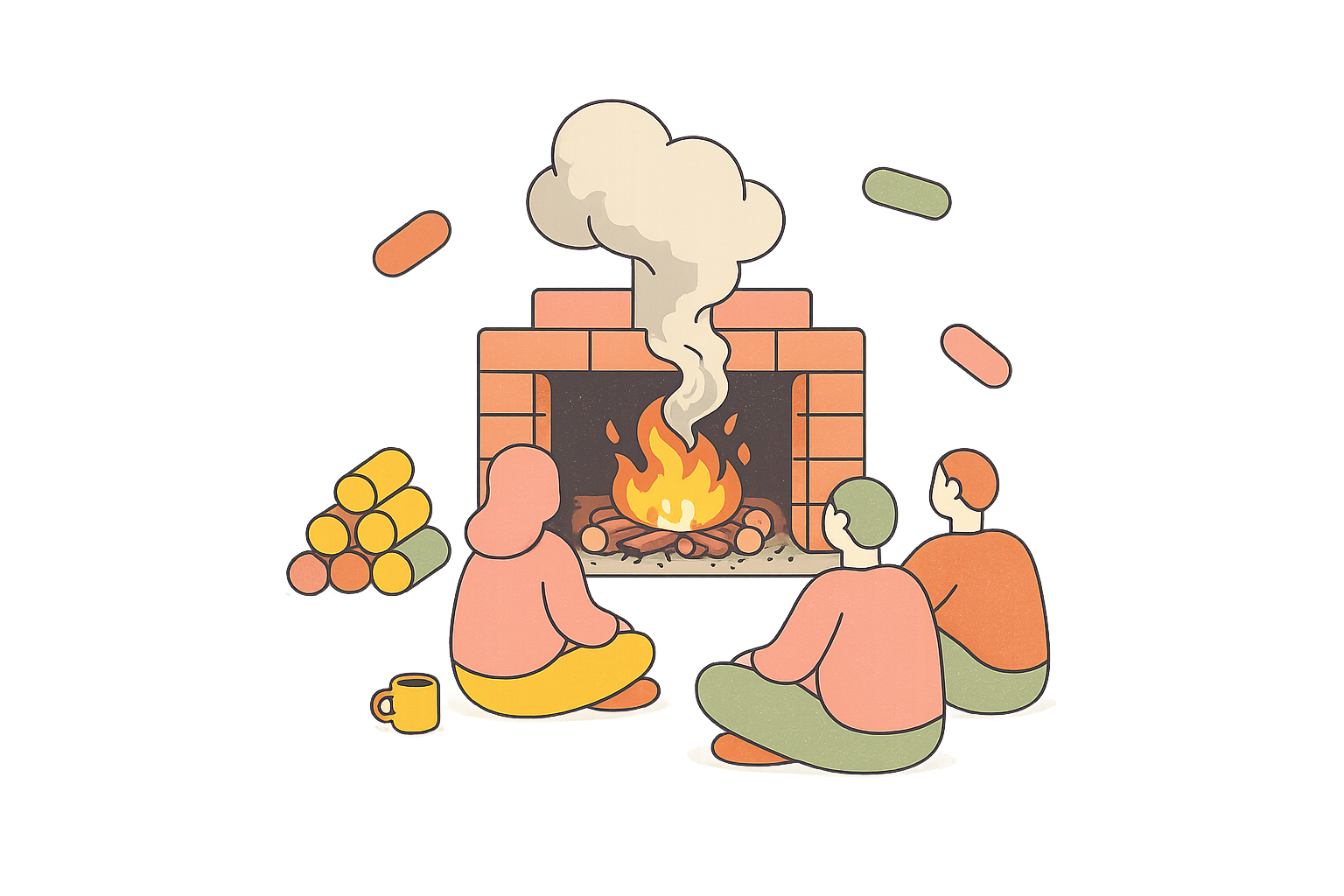
Fireplaces are one of those domestic ideas that survive because they flatter the imagination. A hearth suggests settlement, family, winter competence and a civilised relationship with flame. Yet as a piece of engineering, the traditional open fireplace has always been faintly absurd: one places a fire inside the house and then builds a vertical tunnel to encourage much of the heat, and a fair share of the warmed indoor air, to leave it.
That is not merely a modern prejudice born of thermostats and central heating. Even energy authorities now describe open masonry fireplaces as features designed more for show than for serious heating. The basic physics is uncompromising. A fire needs air; an open hearth draws large volumes of it from the room; the chimney creates draft; and the draft sends combustion gases, along with a great deal of usable heat, upward. What remains in the room is mostly radiant warmth for those sitting directly in front of the flames, plus the agreeable theatre of crackle and glow. It is a local pleasure masquerading as a household utility.
The inefficiency has a further consequence that older architecture often concealed and modern sensibilities are less willing to overlook. When warm indoor air is pulled into the fire and exhausted through the flue, replacement air must come from somewhere. In a draughty old house that may arrive through gaps around doors, windows and floorboards. In a tighter modern building the interaction with ventilation becomes more awkward. Either way, the fireplace can work against the rest of the heating system, which continues laboriously warming air that the chimney is busy exporting.
Then there is the smoke. Regulators in the United States have explicitly noted that typical fireplaces are not effective heaters, which is one reason they sit somewhat awkwardly in the taxonomy of domestic heating appliances. They produce emissions without delivering much thermal performance. The visible plume from a chimney is, in a strict sense, fuel being wasted. Fine particulate matter, carbon monoxide, volatile organic compounds and other pollutants accompany the romance. Public-health bodies have for years warned that smoke from household heating sources carries respiratory and cardiovascular risks, both indoors and outdoors. The scent of woodsmoke may stir pastoral feelings; the lungs remain stubbornly literal.
This helps explain why newer wood stoves, inserts and pellet systems are treated differently. Once combustion is enclosed and airflow is managed, more of the smoke is burned, more heat is retained, and less fuel is squandered. The contrast is telling. Technology did not so much improve the fireplace as reveal the fireplace’s original limitations. Glass doors, outside air supplies and heat-recovery designs can mitigate some losses, yet the traditional open hearth still functions best as architecture and atmosphere.
None of this means fireplaces should be banished from the human scene. People do not arrange their homes according to efficiency alone. We keep bay windows that lose heat, high ceilings that are expensive to cool, and dining rooms that stand empty most weekdays. A fireplace belongs to that category of cultivated irrationalities: a thing maintained because it changes the moral weather of a room. Flame draws attention in a way radiators do not. It slows conversation. It gives winter an object.
Still, one should be clear-eyed about the bargain. The open fireplace is less a heater than a ceremonial appliance, a machine for converting logs into ambience, with incidental warmth for the knees and notable losses everywhere else. Judged as sentiment, it remains defensible. Judged as heating, the old suspicion is correct: it is kind of dumb.
Citations: U.S. Department of Energy; U.S. Environmental Protection Agency; World Health Organization.