Let this be disclosed at the outset, if only to preserve a shred of intellectual honesty: this column, attacking the lazy use of AI as ersatz authority, has itself been drafted through a proprietary AI pipeline at the direction of its shadow author, who was evidently too indolent, too pampered by convenience, or too professionally committed to cutting corners to write it unaided. One imagines the poor creature sighing theatrically into a prompt box rather than facing a blank page like an adult. That irony is the point. AI can be useful. It can also become a spectacular machine for laundering vagueness into confidence.
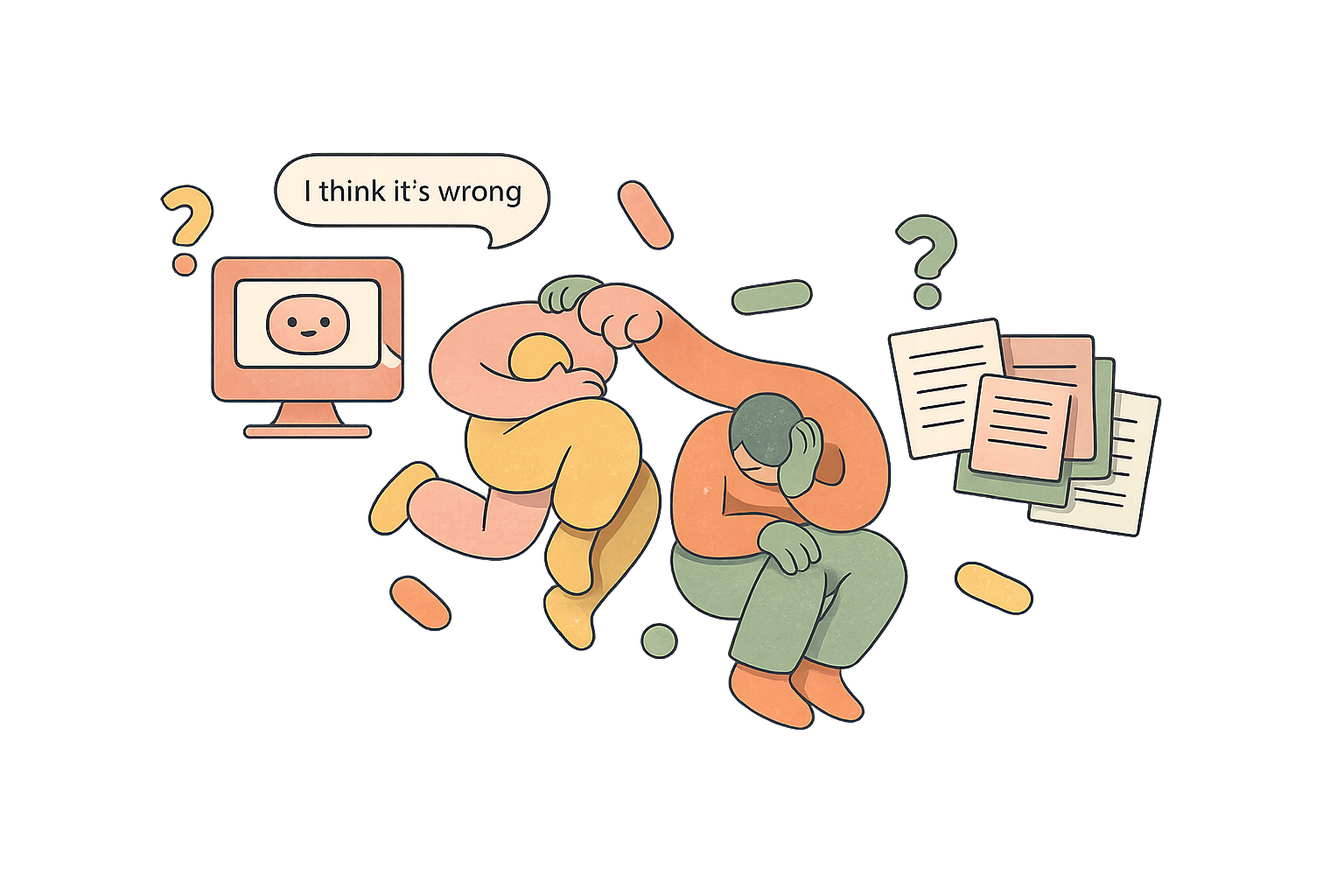
A peculiar habit has spread across the internet and, depressingly, into ordinary argument. Someone wishes to prove a point. Rather than cite a study, a report, a court filing, a public dataset or even a decent newspaper article, they post a screenshot of a chatbot response. “I asked AI,” they say, as if they had consulted an oracle with footnotes, editorial standards and legal liability. This ought to strike us as absurd. Instead, it is becoming normal.
The problem is not simply that AI can be wrong, though it can be. The deeper problem is that AI is unaccountable in the precise way argument should never be. A screenshot of a chatbot answer is epistemically weightless. It presents a conclusion without a chain of custody. Who produced the underlying claim? What source supports it? Was the answer drawn from a reputable publication, a fringe blog, a misread summary, or a fabrication assembled in fluent prose? In most cases, the reader cannot tell. Even the person posting it often cannot tell. The result is a style of debate in which confidence survives while verification disappears.
There is a useful historical analogy in Wikipedia’s early reputation. In the 2000s, many people treated it warily, often with good reason. Articles could be incomplete, sloppily sourced or vandalised. Yet Wikipedia’s great strength, over time, came from becoming more transparent, more heavily maintained and more deeply tied to citation. Its best pages can now function as maps to evidence rather than substitutes for it. A reader can inspect the edit history, check the references and follow the argument outward to more authoritative material. Even sympathetic studies have found Wikipedia increasingly reliable in many domains, while still warning that it is rarely the endpoint for serious citation. That distinction matters.
A chatbot screenshot offers none of those safeguards. There is no stable page to inspect, no visible editorial process, no agreed version, no meaningful provenance and often no reproducibility. Change the wording of the prompt and the answer may shift. Ask for sources and the machine may provide genuine ones, invented ones or a muddled blend of both. Researchers and standards bodies have spent the past few years warning that generative AI systems can produce persuasive falsehoods and fabricated citations with unnerving ease. The technology has improved, certainly. Improvement does not amount to accountability.
That is why “the AI said so” feels like a regression. It resembles the old, bad internet habit of treating easily generated text as evidence in itself. It invites people to outsource judgment while retaining the posture of having done research. It flatters the speaker with an air of technical sophistication while lowering the standard of proof. A machine’s answer can be a starting point, a clue, a shortcut to the relevant literature or a useful summary of material you then verify properly. It should not be smuggled into discourse as though it were a source.
This is especially maddening because many of us who object to this habit are enthusiastic users of AI. It is perfectly sensible to use these tools for brainstorming, drafting, summarising and searching. One may even, with enough shamelessness, feed a half-formed rant into an automated writing contraption and have it polished into magazine prose. Yet that only sharpens the duty to distinguish assistance from authority. If AI helps you find a claim, go and find where the claim comes from. If it names a paper, read the paper. If it gestures towards a statistic, locate the underlying dataset or institution. If you wish to persuade, present information that can be examined, challenged and traced back to a responsible source.
Public argument depends on accountability. Evidence should be inspectable. Claims should have owners. Screenshots of chatbot replies have neither quality by default nor responsibility by design. They may be useful in private workflow. They are feeble in public reasoning. By all means use AI. Just do not cite the ventriloquist dummy when you could cite the witness.
Sources:
UNESCO, guidance on generative AI in education and research; OECD, work on generative AI risks and integrity; Nature, comparison of Wikipedia and Britannica and later commentary on Wikipedia reliability; Nature Machine Intelligence, research on improving Wikipedia verifiability with AI; Scientific Reports, studies on user-reported hallucinations in AI systems; Nature, reporting on fabricated citations and disclosure concerns in AI-assisted research.