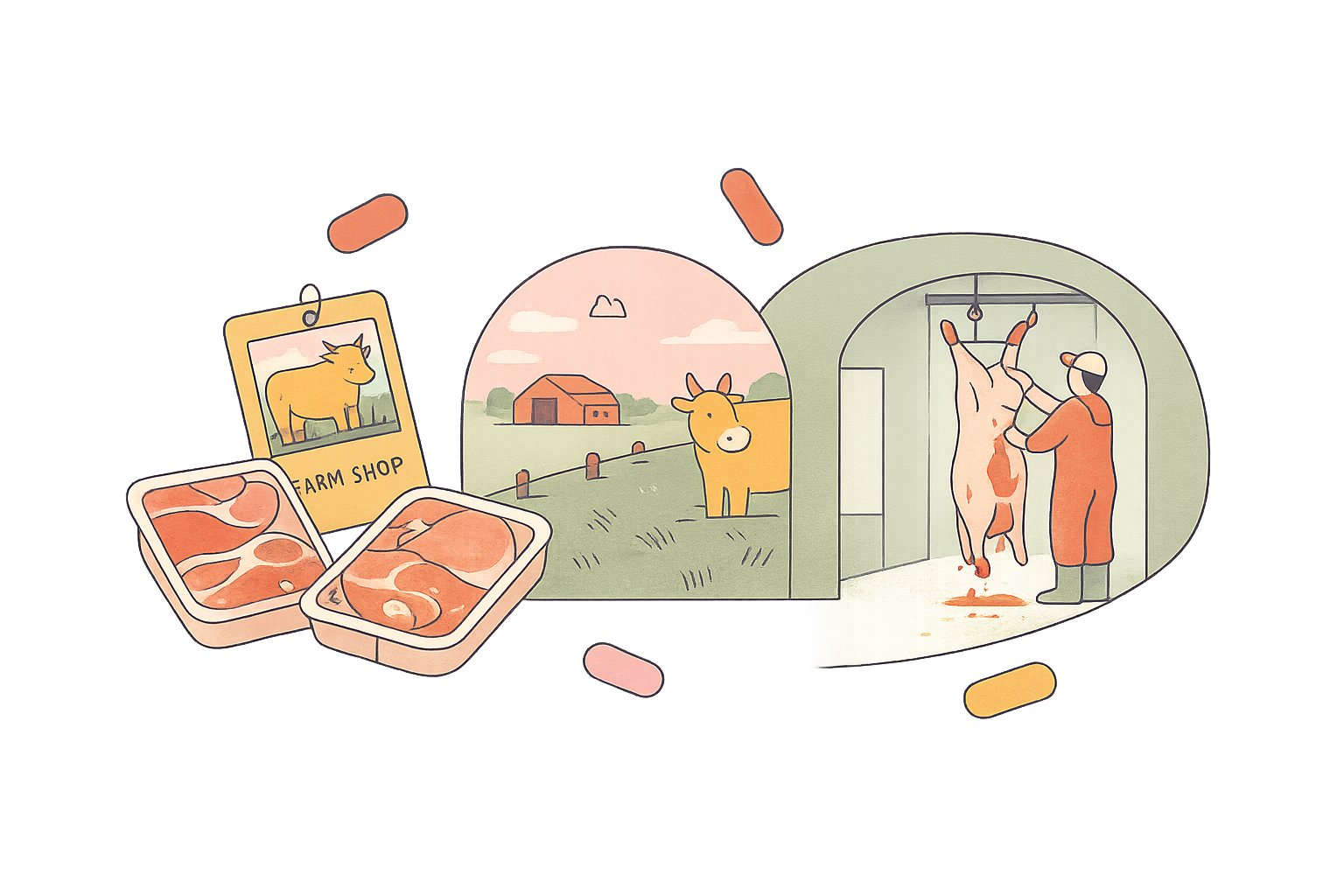
A society that insists on “knowing where food comes from” usually means a farm shop poster, a rustic label and perhaps a photograph of a happy animal in a field. It rarely means the place where that animal’s life ends. The modern meat economy depends on a peculiar moral arrangement: millions of people eat animals, yet the most consequential part of the process is kept architecturally, commercially and psychologically out of sight. If slaughterhouses were as visible as supermarkets, public discussion about meat would be far more honest.
This is not an argument for compulsory vegetarianism. People have eaten meat for millennia, and many will go on doing so. The point is simpler and more demanding: consent should be informed. A citizen ought to understand the conditions under which ordinary consumption becomes possible. When a society sanitises slaughter into sealed facilities, euphemistic language and neatly trimmed plastic trays, it is not merely protecting the squeamish. It is shielding a vast industry from the full weight of public scrutiny.
That distance matters because concealment changes moral behaviour. Research on meat consumption has long observed a psychological tendency to separate the animal from the product. Consumers are more comfortable with flesh than with the reminder that it belonged to a sentient creature. The less visible the process, the easier it becomes to preserve the fiction that meat is simply another neutral commodity, no more ethically loaded than bread or soap. Industrial food systems have become highly efficient at sustaining that illusion. They divide labour, hide blood behind biosecurity walls and present the final item in the language of cuts, portions and brands rather than bodies.
Transparency would improve more than conscience. It would sharpen animal-welfare standards. Regulators in Britain and parts of Europe have already moved toward greater oversight through mandatory CCTV in slaughterhouses and official veterinary inspection, acknowledging that what happens at the point of killing requires close monitoring. That is progress, though surveillance for inspectors is not the same as meaningful public visibility. A regime of fuller disclosure could include routine publication of welfare breaches, clearer labelling about slaughter and handling practices, and public education that treats meat production as a civic subject rather than an embarrassing secret.
The likely objection is that most people do not need to witness slaughter in order to understand it. That is true in the literal sense. No one proposes a national school trip to the abattoir. Yet there is value in making the reality harder to evade. Societies already do this in other domains. Democracies publish images and reports from war zones because citizens should reckon with the consequences of state violence. Public-health campaigns have shown diseased lungs and damaged organs because concealment flatters destructive habits. Meat should not enjoy a special exemption from truthfulness merely because the truth is unpleasant.
There is, admittedly, a risk of sentimentality here. Slaughterhouses are not theatres of pure sadism. Many workers perform difficult, low-status labour under demanding conditions, and many take animal handling seriously. Nor would a visit to one settle every ethical argument. Some observers would come away convinced that humane slaughter, while grim, can be real. Others would decide that the enterprise is indefensible. Good. The aim of disclosure is not ideological uniformity. It is moral adulthood.
A mature food culture would ask more of consumers than preference and price sensitivity. It would ask whether we are willing to look at what our appetites require. If the answer is no, that refusal itself says something important. A person may still choose to eat meat after seeing the process. But the choice would at least be anchored in reality. In a decent society, comfort should not depend on deliberate blindness.
Citations: Food Standards Agency guidance on slaughterhouse animal-welfare enforcement and CCTV requirements; Food Standards Agency Animal Welfare Report 2024/25; European Commission guidance on slaughter and stunning rules; European Commission materials on animal-welfare legislation review; peer-reviewed studies in Appetite and Meat Science on consumer responses to slaughter, trust and transparency in food systems, and psychological distance in meat consumption.